



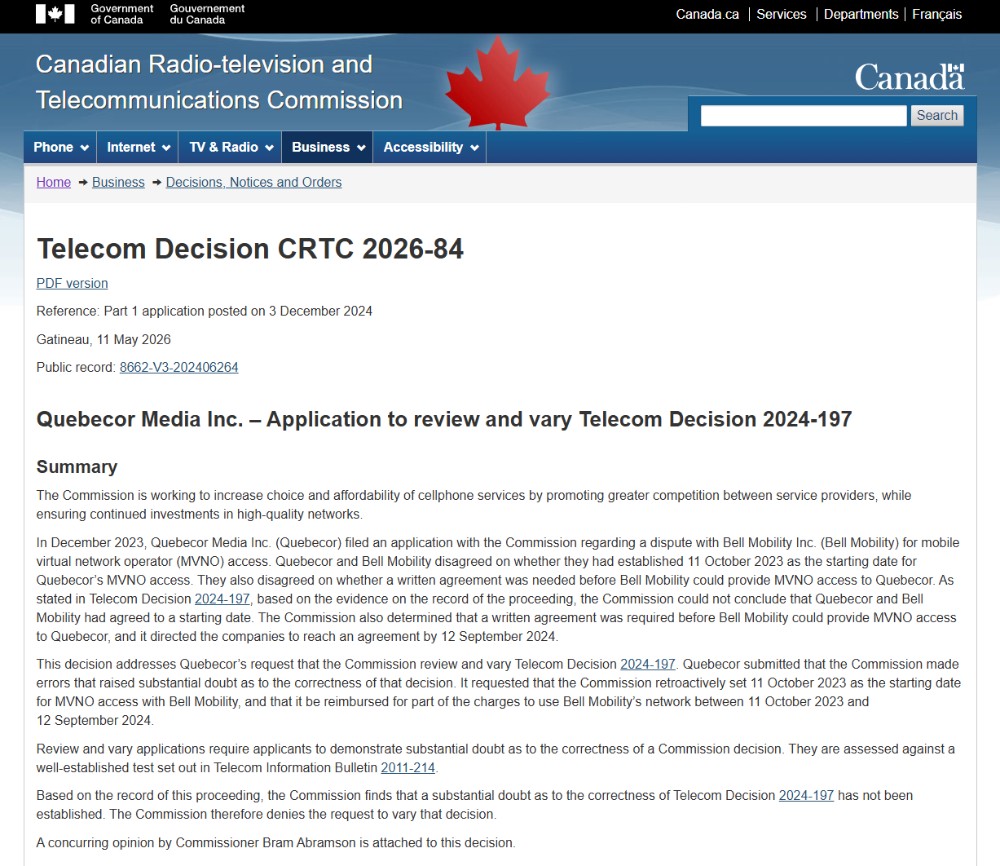
The CRTC has rejected Quebecor’s request in its dispute with Bell over MVNO access, a framework designed to help regional providers expand their mobile services by using the networks of larger carriers.
Quebecor wanted the CRTC to retroactively recognize October 11, 2023, as the start date of its MVNO access to Bell’s network. The company also requested reimbursement for the difference between roaming rates and MVNO rates. The CRTC refused, saying Quebecor had not shown substantial doubt about the earlier decision.
What the CRTC confirmed
The decision confirms one key rule: a regional provider must have a formal MVNO access agreement in place before it can benefit from MVNO terms.
In other words, having technical access to a network is not enough. For the CRTC, official MVNO access begins only once the required agreement and conditions are in place.
It is a technical distinction, but it matters for Canada’s wireless market.
Why it matters for consumers
For most Canadians, this decision will not change their phone bill tomorrow.
But over time, it can affect how quickly regional providers expand, launch new offers and put pressure on the major national carriers.
The faster regional players can access the networks they need, the faster competition can move. But when every step depends on formal agreements, deadlines and regulatory interpretation, the process remains slower.
In short: Canada wants more mobile competition, but that competition still moves at paperwork speed.
The bigger issue
The CRTC is trying to balance two goals: encouraging competition while keeping the rules clear and predictable for everyone.
This decision sends a message to the market. MVNO rules can support competition, but they still need to be followed in order.
For consumers, the impact is indirect but important. A stronger and more efficient MVNO framework could eventually mean more choice, more pricing pressure and better mobile offers.
PlanHub’s advice
Canada’s mobile market changes often, but not always in obvious ways. CRTC decisions, MVNO agreements and new promotions can all influence the plans available to consumers.
Before renewing or switching your mobile plan, compare the options available in your area on PlanHub. It is the easiest way to see whether your current plan is still competitive.