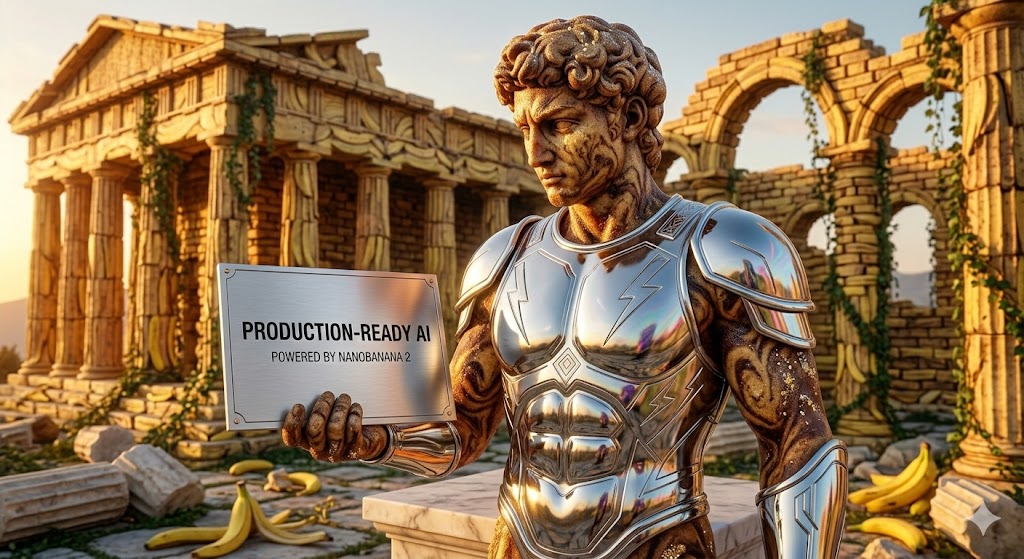



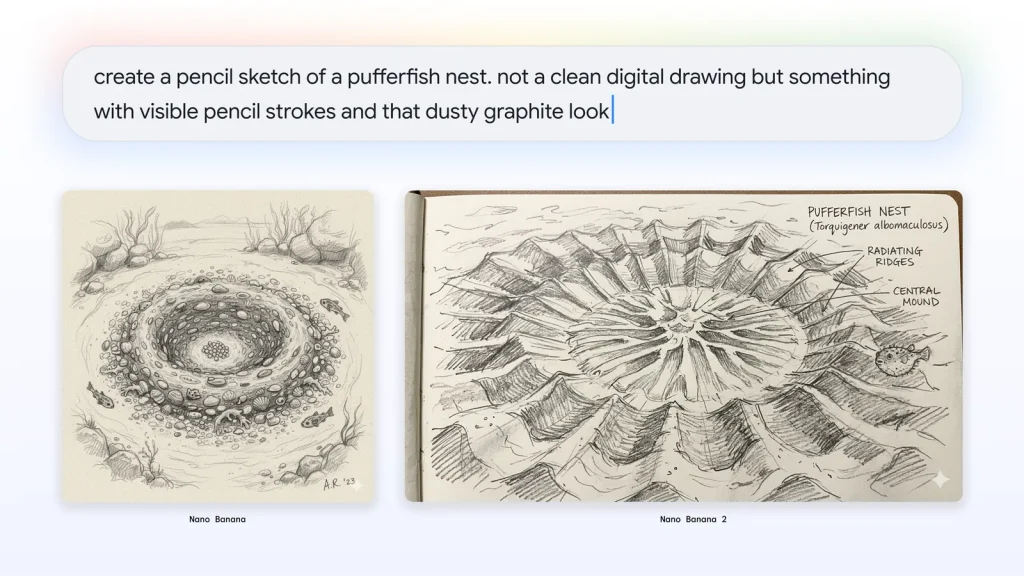
Google DeepMind has made a significant impact with the announcement of Nano Banana 2. This new image generation model does more than just promise “prettier” visuals; it directly targets the concrete needs of businesses and marketing teams with “Flash” speed and professional-level control.
1. Speed at the Service of Creative Iteration
Nano Banana 2 combines the power of “Pro” models with the rapid performance of the “Flash” line. For a marketing team, this changes everything: it is no longer about waiting long minutes for a result, but iterating in real-time.
- Instantly test multiple creative angles.
- Adjust composition details without breaking the workflow.
- Adapt a visual into multiple formats in seconds.

2. An End to the Headache of Visual Consistency
One of the biggest hurdles to using AI in a corporate setting has been subject instability. Nano Banana 2 brings major improvements to:
- Subject Resemblance: Maintaining an identical character from one image to another.
- Object Fidelity: Keeping the same characteristics for a specific product throughout an entire campaign.
- Complex Instruction Following: A better understanding of nuanced prompts.
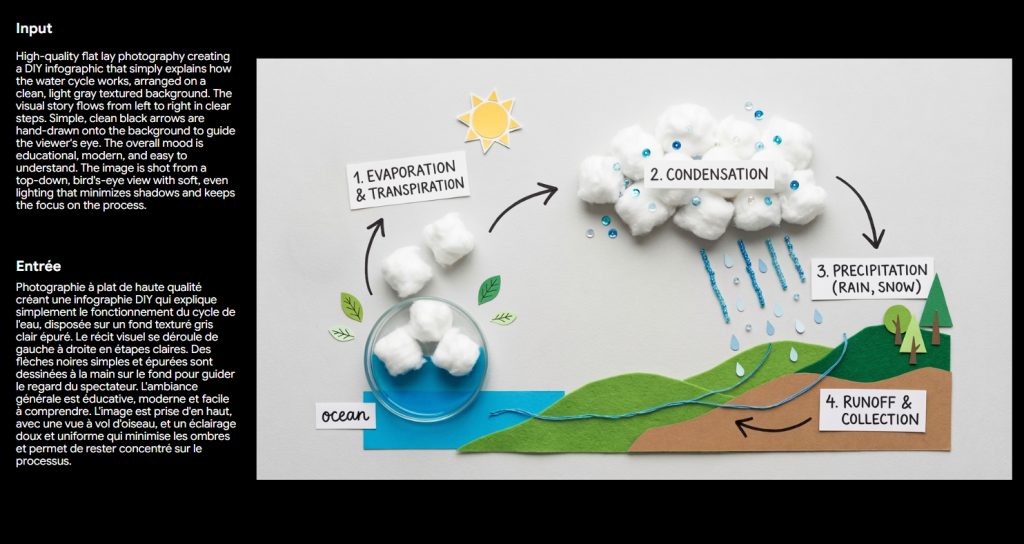
3. Readable Text: The Real Game Changer
No more unreadable text or distorted letters. Nano Banana 2 now allows for the integration of crisp typography directly into the image, including localization and translation capabilities. This opens the door to the direct creation of:
- Web banners with headlines and taglines.
- YouTube thumbnails and social media visuals.
- Simple infographics and event posters.

4. “Production-Ready” Formats: From Stories to 4K
Control is now total over aspect ratios and resolutions, ranging from 512 px to 4K. For small teams that don’t always have a designer on hand, this is a massive boost in autonomy for generating sharp, immediately usable visuals across all advertising platforms.
5. Trust and Traceability: SynthID and C2PA
With a massive rollout across the Google ecosystem (Gemini, Ads, Vertex AI), the question of transparency becomes central. Google is integrating:
C2PA: A metadata standard to prove the origin of the visual.
SynthID: An invisible watermark to identify generated content.