


Rogers is betting on Starlink, Bell and TELUS on AST SpaceMobile, and Ottawa on
Telesat Lightspeed. Behind the tech race sits a question Prime Minister Carney has
now said out loud: who actually controls Canada’s connectivity?
Starlink Mobile and AST SpaceMobile: carriers pick their camps
At MWC 2026 in Barcelona, SpaceX officially rebranded Direct to Cell as Starlink Mobile,
reporting 16 million unique users across 650 satellites. Rogers distributes the service in
Canada as Rogers Satellite since late 2025 at $15 per month. AST SpaceMobile revealed a
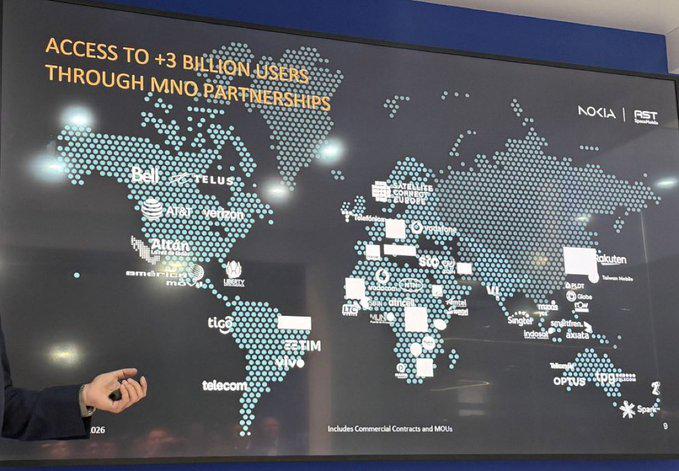
global partner map at MWC now including both Bell and TELUS. Bell has held equity through
Bell Ventures since 2021. TELUS formalized a commercial deal on March 3, 2026, investing
in ground infrastructure and taking a direct equity position. The BlueBird service launches late
2026 on existing smartphones.
Telesat Lightspeed: the third camp, entirely Canadian
While carriers align with foreign players, Ottawa is building its own answer. Telesat
Lightspeed is nearly 200 LEO satellites built on Canadian soil, backed by a $2.14-billion
federal loan in 2024, targeting commercial launch in 2027. Its satellites fly at 1,300 km, twice
Starlink’s altitude, avoiding lower orbital congestion. In December 2025, Ottawa signed a
strategic partnership with Telesat and MDA Space for Arctic military satellite communications
under the ESCP-P project, with a budget exceeding $5 billion and deployment estimated by
2037.
The real issue: strategic autonomy, not just coverage
On March 6, 2026, before Australia’s parliament, Prime Minister Carney stated satellite
communications are now a fundamental requirement for security and strategic autonomy. He
cited Elon Musk’s restrictions on Ukraine’s military use of Starlink to argue for Canadian
sovereign orbital infrastructure. Ontario cancelled a $100-million Starlink contract during the
Trump trade war, and several provinces are reviewing their own agreements. Starlink
currently ranks as Canada’s sixth-largest internet provider.

What this means for Canadian consumers
For now, Starlink remains the only realistic option for rural and remote communities. Telesat
Lightspeed won’t be online before 2027 and AST SpaceMobile targets late 2026. The
dependency question is most acute institutionally for now, but will eventually reach consumer
plans. Starlink Mobile V2, expected mid-2027, could hit 150 Mbps. Longer term, Canadians
may choose between an American option, a global partnership service, and a fully domestic
one, with very different implications depending on who controls the switch.