
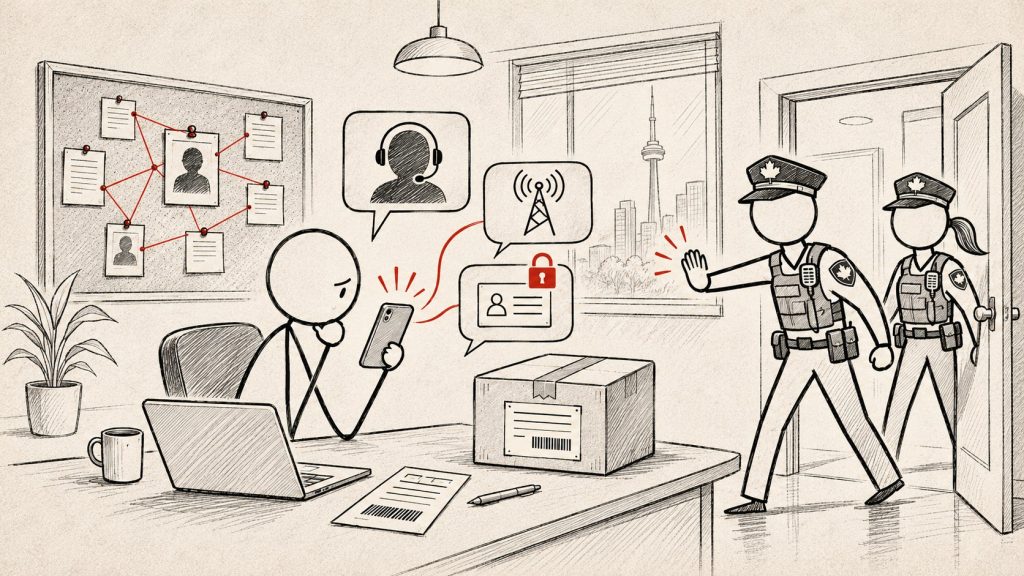


For nine months, Canadian police have repeatedly warned consumers about fraudsters impersonating telecommunications providers, technical support representatives and trusted individuals. Edmonton police estimate approximately $20 million in losses linked to one cellphone scam investigation, while Toronto officers recently prevented a potential $2.9 million fraud. Similar schemes are now documented in the United States, the United Kingdom and other countries.
A discounted smartphone, an incorrect delivery or a routine internet speed test might not sound particularly suspicious. Yet each of these situations has been used by criminals to steal valuable devices, obtain personal information or gain access to online banking.
Since February 2026, PlanHub has been following these warnings across Canada. While the incidents involve different methods and locations, many rely on the same underlying tactic: impersonating a trusted company or individual to convince someone to follow fraudulent instructions.
Edmonton police link cellphone scam network to approximately $20 million in losses
On November 3, the Edmonton Police Service announced that its investigation had helped disrupt an international cellphone fraud network.
According to investigators, scammers impersonated representatives of major telecommunications providers, including Rogers, TELUS and Virgin Mobile. Victims received calls offering free smartphones, discounted devices or cheaper wireless plans.
The callers then persuaded customers to order legitimate devices through their actual wireless providers.
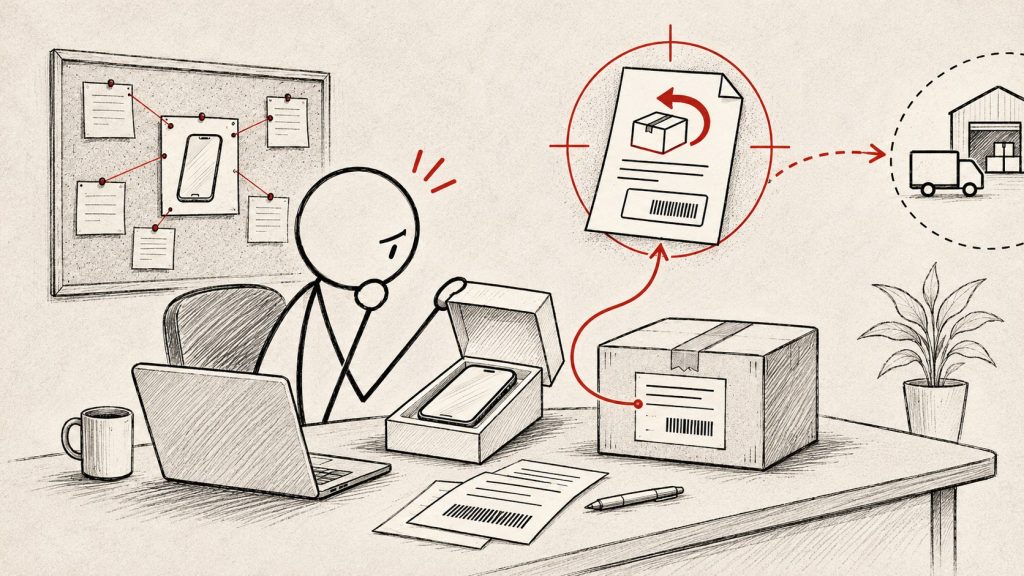
Once the smartphones arrived, the scammers contacted the victims again, claiming that the wrong devices had been delivered. Customers were instructed to send the phones to a different address, where they were collected and resold.
Edmonton police reported approximately 100 incidents in 2026, with estimated losses of $20 million. Investigators believe the operation had been active since at least October 2024 and linked it to several call centres in Lahore, Pakistan.
The investigation demonstrates how a seemingly ordinary mobile promotion can become part of a sophisticated international fraud operation.
Toronto police prevent potential $2.9 million telecom fraud
Just two days later, on November 5, cooperation between police in Edmonton and Toronto helped stop another major fraud attempt.
This time, the scammers used a different approach.
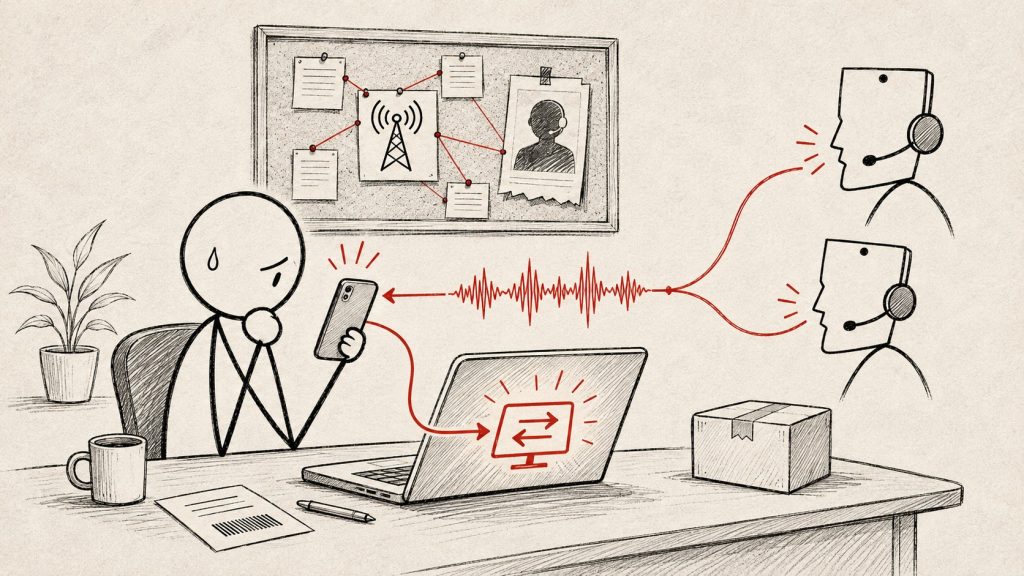
A caller impersonating a major telecommunications provider claimed that neighbourhood internet upgrades required a speed test on the customer’s computer.
The victim was persuaded to install UltraViewer, a legitimate remote-access application. The suspect then claimed to discover computer viruses and other problems before instructing the victim to open online banking to check for unauthorized transactions.
When Toronto officers arrived, the victim was still communicating with the suspects through a video call.
Police intervened before any money could be transferred.
The $2.9 million figure represents a potential loss prevented by police, not money stolen or subsequently recovered.
The Toronto Police Service published its report on November 6.
Unlike the fraudulent phone delivery cases, this scheme focused on remote computer access and potential banking theft.
Nine months of warnings: PlanHub’s previous coverage
The latest incidents are part of a broader pattern that PlanHub has documented throughout 2026.
Our earlier reports include:
- February: Grandparent scams targeting seniors. Criminals impersonated grandchildren or legal representatives, creating fake emergencies to obtain money from older victims.
- August: Fake Rogers and Fido phone promotions. Scammers offered discounted devices before redirecting real shipments, sometimes arranging to collect phones from customers’ homes.
- October: More than $33,000 lost on Vancouver Island. RCMP investigators warned about fraudulent mobile phone deliveries and return labels.
- Early November: Thunder Bay police issue another cellphone scam warning. Criminals continued exploiting legitimate phone orders and fake return instructions.
- November: Edmonton police investigate approximately $20 million in estimated losses, followed by the attempted $2.9 million fraud interrupted in Toronto.
These cases have not all been linked to the same criminal organization. Grandparent scams also represent a different type of impersonation fraud than fake mobile promotions.
Nevertheless, they share a common reliance on trust, urgency and deception.
How much money have Canadians actually lost?
The documented financial impact is already substantial, although the figures need careful interpretation.
Edmonton police estimate approximately $20 million in losses related to their cellphone fraud investigation.
On Vancouver Island, RCMP reported more than $33,000 in losses involving another phone delivery scam.
Toronto police, meanwhile, prevented a potential $2.9 million loss before any funds were transferred.
Those figures cannot simply be combined into one precise national total.
According to figures from the Canadian Anti-Fraud Centre reported by Global News in August, Canadians had declared more than $17 million in service fraud losses during the first six months of 2026.
The service fraud category includes telecommunications scams, but also other fraudulent services and technical support schemes. It is not a telecom-only total.
More broadly, the Canadian Anti-Fraud Centre recorded approximately $351 million in reported fraud losses across all categories in the first half of 2026.
The agency estimates that only 5% to 10% of fraud incidents are reported, suggesting the full impact is likely considerably larger.
However, because the categories and investigations may overlap, these figures should not be added together to create an estimated national telecom scam total.
United States: Fake AT&T promotions follow a familiar pattern
The same type of cellphone scam has also been reported south of the border.
On November 9, 2026, CBS Philadelphia documented the experience of a Delaware resident who received what appeared to be a loyalty promotion from AT&T.
The caller promised four new iPhones and a lower monthly bill.
After the devices were purchased, the scammers claimed there was an activation problem and instructed the customer to return the phones using a prepaid shipping label.
The customer was eventually left facing a US$5,128 bill for devices he no longer possessed.
AT&T resolved the dispute after CBS Philadelphia intervened.
The similarities with the fraudulent Rogers and Fido phone promotions previously reported in Canada are striking.
The broader scale of impersonation fraud in the United States is also significant.
According to the Federal Trade Commission, Americans reported US$3.5 billion in losses from impersonation scams in 2025.
Separately, the FBI’s Internet Crime Complaint Center recorded approximately US$2.13 billion in losses related to tech and customer support scams in 2025.
Both figures represent broader fraud categories. They should not be interpreted as losses exclusively caused by telecom impersonation or added together without accounting for possible overlap.
United Kingdom: Almost the exact same fraudulent phone return scheme
The British government’s Stop! Think Fraud campaign has also documented a nearly identical scam.
In a February 2026 case, a fraudster pretending to represent a mobile provider told a customer that network upgrades required a replacement SIM card.
The conversation moved to WhatsApp, where the criminal obtained a one-time security code. That code was then used to access the customer’s account and order an expensive smartphone.
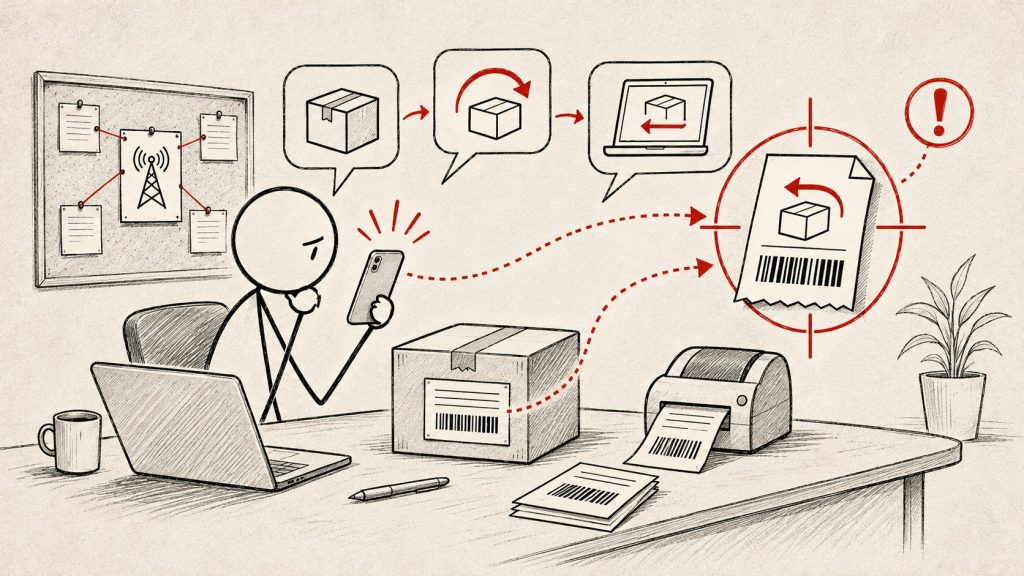
After the phone was delivered, the scammer claimed the wrong item had arrived and provided a prepaid QR code for the return.
The customer unknowingly shipped the device directly to the criminals.
The pattern closely resembles the incidents investigated in Canada: an impersonated mobile provider, a real device order and fraudulent return instructions.
This shows that the technique is being used internationally, although there is no evidence that all these operations are controlled by the same group.
France and Australia report related fraud techniques
Other countries are experiencing different variations of the same underlying methods.
In France, the national cybersecurity assistance platform Cybermalveillance.gouv.fr reported a 517% increase in phone-number spoofing activity in its 2025 assessment.
Caller ID spoofing can make a fraudulent call appear to originate from a familiar business or trusted organization.
In Australia, the National Anti-Scam Centre reported A$69.9 million in remote-access scam losses during 2025.
These scams often involve criminals impersonating technical support staff, financial institutions or other trusted service providers to gain control of a victim’s computer.
This broader category is particularly relevant to the attempted fraud interrupted by Toronto police.
The French and Australian statistics are not limited to telecommunications scams, but they help illustrate how widely these deceptive practices are being used.
How to protect yourself and your family from telecom scams
The Canadian Anti-Fraud Centre recommends independently verifying unexpected offers or account-related requests with the actual service provider.
Several simple precautions can reduce the risk:
- Never share account passwords, security codes or verification codes with unexpected callers.
- Never install remote-access software because someone claiming to be from a telecom provider asks you to.
- Check unexpected device orders or return instructions through your provider’s official app or website.
- Be suspicious of unusually generous offers, especially when the caller insists on an immediate decision.
- Never ship a smartphone to an address supplied only by an unsolicited caller.
- If someone has accessed your computer remotely, disconnect it from the internet and immediately contact your bank using another trusted device.
Suspected incidents should also be reported to the affected provider, local police and the Canadian Anti-Fraud Centre.
If account information may have been compromised, change passwords using a trusted device and review the security of affected accounts.
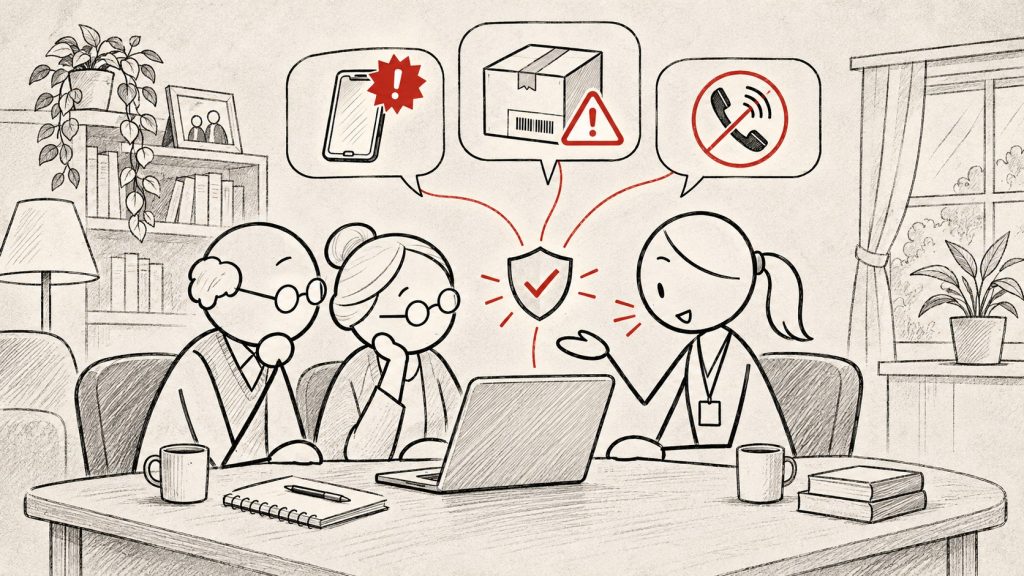
It is equally important to share these warnings with parents, grandparents, relatives and neighbours.
Older adults may be specifically targeted by certain impersonation schemes, but sophisticated fraud can affect anyone, regardless of age or technical experience.
Victims deserve support and assistance, not blame or embarrassment.
Stopping fraud requires more than consumer awareness
After nine months of repeated police warnings, this is no longer just a story about suspicious phone calls.
Fraudsters are exploiting legitimate device ordering systems, financing arrangements, delivery services and remote-access technology to make their schemes more convincing.
Telecommunications providers, financial institutions, delivery companies and law enforcement agencies all have a role to play in detecting suspicious activity, strengthening verification procedures and sharing information about emerging threats.
The cooperation between Edmonton and Toronto police shows how quickly coordinated action can prevent substantial financial losses.
But public awareness remains essential.
Take five minutes to discuss these scams with someone close to you. A simple conversation today could prevent a devastating financial loss tomorrow.
Sources and Further Reading
- Edmonton Police Service, November 3, 2026
- Toronto Police Service, November 6, 2026
- iPhone in Canada, November 11, 2026
- Canadian Anti-Fraud Centre, first-half 2026 report
- Global News, August 19, 2026
- CBS Philadelphia, November 9, 2026
- FTC, 2025 impersonation fraud statistics
- FBI, 2025 Internet Crime Report
- UK Government, Mobile Provider Impersonation Fraud
- France, Cybermalveillance.gouv.fr 2025 report
- Australia, 2025 Targeting Scams Report