


First semester, first apartment. Between organizing your classes, packing boxes, and setting up your services, the list of things to take care of can grow quickly.
Your new place does not need to be perfectly equipped from day one. The goal is to cover the essentials, take care of a few important tasks ahead of time, and avoid unpleasant surprises once the boxes arrive.
Here is our checklist for preparing your first student apartment.
Check what is included in your apartment and lease
Before buying anything, find out what your new place already includes.
A student residence may provide a bed, desk, and sometimes a mini-fridge. If you are renting an apartment, the fridge and stove may already be included, along with window coverings or certain pieces of furniture.
Review your lease to see whether any services are included in your rent, such as:
- electricity;
- Internet;
- parking;
- furniture or appliances.
Check the rules concerning pets, noise, and common areas as well, especially if you will be living with roommates.
If you are planning a full move, confirm with your landlord or building manager where the moving truck can park and whether other tenants need to be notified.

What should you buy for your first student apartment?
The easiest way to build your list is room by room.
Start with the things you use every day. Everything else can wait a few days or even a few weeks.
Before buying everything new, ask your family whether they have anything they no longer need. Sheets, towels, dishes, and small appliances can easily get a second life while helping you reduce your initial expenses.
Bedroom
In addition to your mattress and bed, consider bringing:
- sheets;
- a pillow;
- a duvet;
- a bedside lamp;
- a few hangers.
If your windows do not have blinds or curtains, blackout curtains can also become surprisingly valuable from the very first night.
Bathroom
Your basic bathroom supplies should include:
- towels;
- toiletries;
- a basic medicine and first-aid kit;
- tissues and toilet paper;
- a small garbage bin.
If you share the bathroom with roommates, a shower caddy can also make it easier to move your products back and forth.
Don’t forget your tech essentials
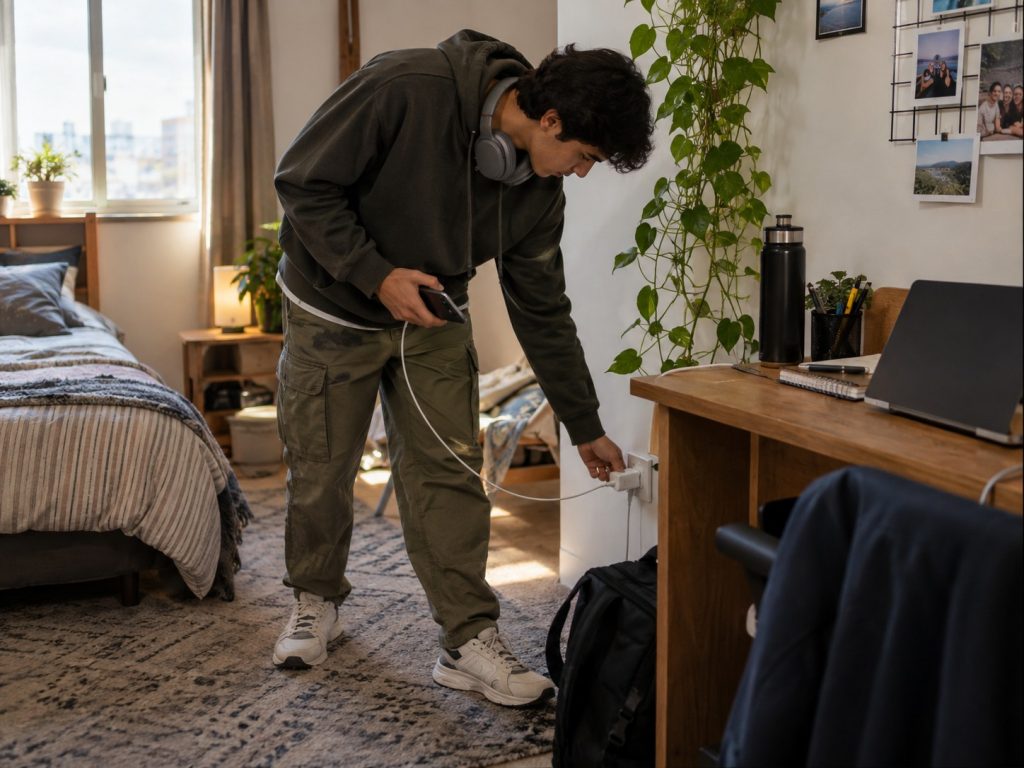
A phone and laptop are already part of everyday life for many students, but a few extra accessories can prevent plenty of headaches:
- two chargers for your phone;
- headphones;
- a power bar with surge protection;
- an HDMI cable if you use an external monitor.
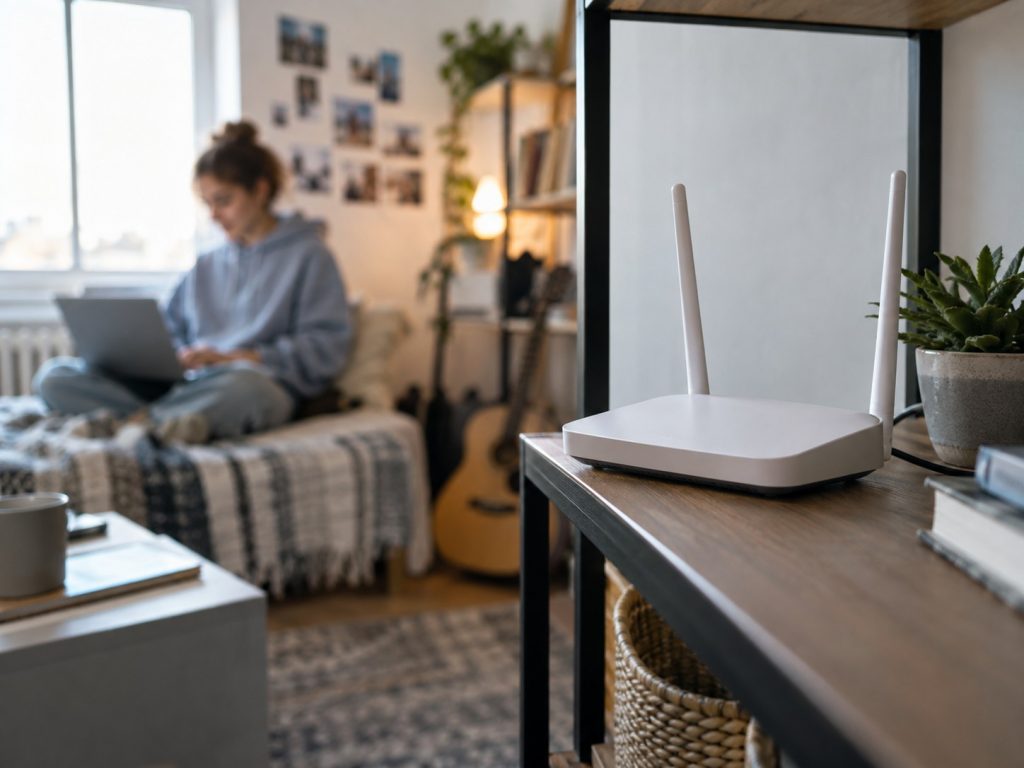
Most importantly, check whether Wi-Fi is included with your apartment or residence.
If it is not, it is better to take care of it before moving day. Prices, speeds, and available providers can vary depending on your address, so you can compare home Internet plans with PlanHub before choosing a provider.
A reliable connection quickly becomes essential when classes, assignments, video calls, messaging, and entertainment all rely on the same network.
Kitchen: start small
You do not need 14 pots and pans before cooking your first meal.
Start with:
- place settings for two to four people;
- a set of cutlery;
- one pot and one pan;
- a cutting board and knife;
- a can opener;
- two dish towels;
- a sponge;
- dish soap;
- a few reusable food containers;
- a garbage bin;
- all-purpose cleaner;
- a microfibre cloth;
- a broom.
Small appliances such as a kettle, toaster, or microwave can often be found second-hand for a fraction of the retail price.
Give yourself a few weeks before fully stocking the kitchen. You will quickly figure out what you actually use.
3 things to take care of before moving day
Some tasks are worth handling several weeks before the move.
1. Change your address
In Quebec, the Service québécois de changement d’adresse allows you to notify several government departments and organizations of your new address in a single online process.
You can use the Quebec government’s moving and change-of-address service.
Remember that you may still need to contact some organizations separately, including your bank, employer, or insurance provider.
2. Get tenant insurance
Tenant insurance can protect your personal belongings in the event of theft, fire, or water damage.
Compare a few offers before choosing a policy so you can find coverage that fits both your needs and your budget.
3. Schedule your Internet installation
If Internet is not already included, do not wait until moving day to set it up.
Depending on the provider and building, installation or a technician visit may be required. Booking ahead can help you avoid starting the semester without an Internet connection.
Keep your important documents within reach
Avoid packing every important document at the bottom of box number 17.
Keep these documents nearby, either on paper or digitally:
- your signed lease;
- proof of your first month’s rent payment;
- your student ID;
- proof of enrolment;
- your transit pass;
- your tenant insurance policy;
- your landlord’s contact information;
- your mover’s contact information, if applicable;
- your Internet provider information.
3 tips to make moving day easier
1. Label every box by room.
Write “bedroom,” “kitchen,” or “bathroom” directly on each box. Add labels such as “fragile” or “heavy” when needed.
2. Set up your bed first.
After several hours of carrying boxes, you probably will not want to assemble your bed at 11 p.m.
3. Assign someone to direct traffic.
If friends or family are helping, have one person stay near the entrance and tell everyone where each box belongs. It can save plenty of unnecessary trips and questions.

Take another look at your cell phone plan
Moving into your first apartment is also a good opportunity to review some of your monthly expenses.
If you have had the same cell phone plan for a few years, check:
- how much data you actually use;
- whether you can keep your current phone;
- whether your plan includes features you no longer need;
- whether a cheaper plan would cover the same needs.
PlanHub also maintains a regularly updated guide to the best back-to-school cell phone plans for students in 2026.
Saving a few dollars each month on Internet or mobile service can add up when rent, groceries, and school expenses all arrive at the same time.
Buy what you need as you go
Your first apartment does not need to be complete on the day you receive the keys.
After a few days, you will have a much better sense of what you actually need. Some items that seemed essential on your moving checklist may turn out to be unnecessary, while other needs will only become obvious once you settle into your new routine.
Resale groups, thrift stores, and second-hand marketplaces can significantly reduce the cost of getting established. If you have roommates, consider splitting shared purchases such as a vacuum cleaner, cleaning products, or extra dishes.
The most important thing is to cover the essentials, take care of important tasks in advance, and give yourself time to gradually turn your first apartment into a home.