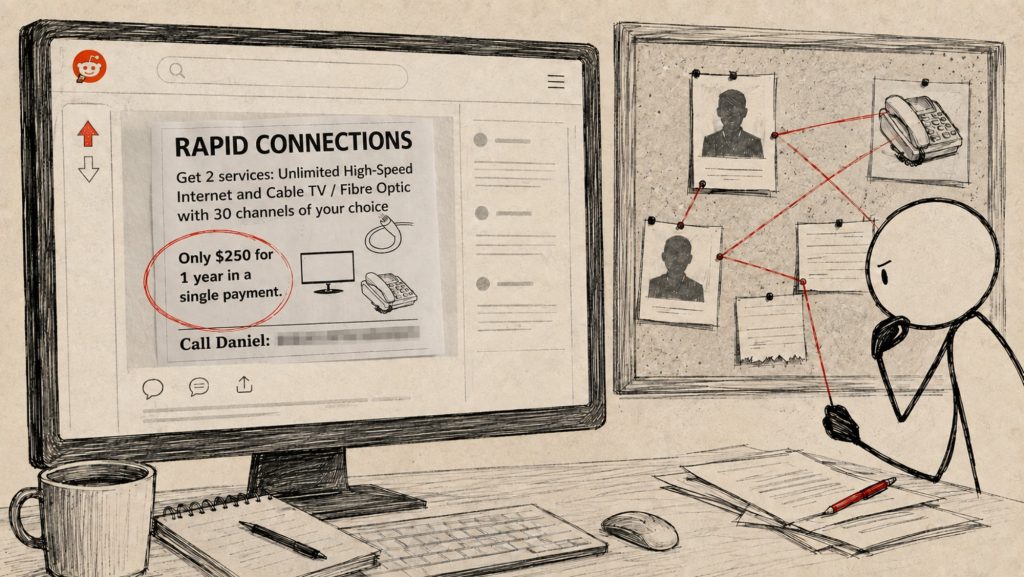


Two names, one voice. Across three phone calls, PlanHub’s investigation found that “Daniel,” the first person to answer, and “Benoît,” the supposed technical manager who was expected to call back, are clearly the same man.
The offer is designed to attract attention: unlimited high-speed Internet, cable or fibre television, 30 channels of the customer’s choice, equipment and installation, all for a single $250 payment covering an entire year. On paper, “Rapide Connexions” promises spectacular savings. The moment questions are asked, however, the story begins to fall apart.
After a photograph of the flyer appeared on Reddit, PlanHub called the number shown on it. No invoice. No guaranteed speed. Vague references to Bell and Videotron. Identities that change. Then, during the third call, a question about skin colour and an explicit refusal to serve White people.
The pattern reveals the outline of a targeted scheme: gain the trust of newcomers from Africa or the Caribbean who may not yet know the usual prices, contracts and practices of Quebec’s telecommunications market. PlanHub no longer considers this a poorly explained offer. The complete absence of invoices, the false identities, the ethnic targeting and the lack of any recognized relationship with Videotron all point in the same direction: a scam.
A $20.83 Monthly Promise, Including Television
The flyer claims that a customer can receive unlimited high-speed Internet and cable or fibre television with 30 channels of their choice for a single $250 payment. Spread over twelve months, that works out to approximately $20.83 per month.
At the time of publication, the cheapest residential Internet plans listed by PlanHub in Montreal start at roughly $40 per month, without television included. An exceptionally low price does not prove fraud on its own. It does require serious verification, especially when the flyer does not provide an exact speed, a legal business name, an address, tax information or service conditions.
First Call: Every Speed at the Same Price
During the first call, our team asked “Daniel” whether he was acting as a reseller and requested details about the technology and speed included with the offer.
The caller said the speed would depend on the area and mentioned several possibilities, ranging from 50 or 100 Mbps to 1.5 and even 8 Gbps. He then claimed that the price would remain the same regardless of the speed available at the customer’s address.
That answer creates the first major problem. The word “unlimited” normally refers to the amount of data that can be used, not the speed of the connection. A legitimate Internet offer should clearly state the download and upload speeds being sold.
According to “Daniel,” the owner would personally handle the installation and bring both a modem and a television receiver. He also claimed that the service could run through Bell or Videotron, without explaining which company would actually provide the connection at a specific address, presenting a wholesale agreement or identifying a real underlying provider.
No Invoice
A small independent provider can legally use a larger company’s network through a genuine wholesale agreement. It must still be able to identify the network, explain what it is reselling and provide the customer with a contract. A single residential connection does not become both a Bell and a Videotron subscription through one $250 annual payment. Presenting the networks as interchangeable, without naming a partner or providing documentation, is a major warning sign.
PlanHub contacted representatives at Quebecor and Videotron about the flyer. Based on the information provided to our team, Videotron does not recognize any agreement with this person or with “Rapide Connexions.” The company said it would conduct its own checks.
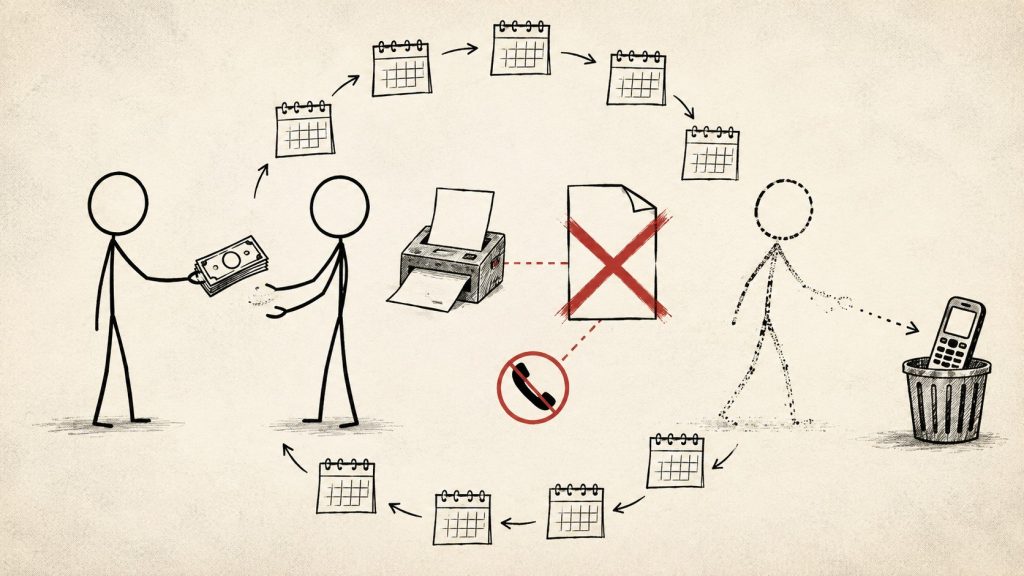
When our team asked whether an invoice would be provided, the answer was unambiguous: there would be no invoice at all. No document at the time of payment, no billing during the year and no formal account follow-up. After twelve months, the customer would simply start again and pay another $250. The caller also offered a free one-week trial before asking for the potential customer’s address.
This structure would make recourse extremely difficult. Without an invoice, contract, customer account or legal business identity, a person who loses money may struggle to prove what was purchased. The number could later be replaced and the flyer redistributed in a different form. PlanHub has not confirmed that the number has already changed, but the possibility could help explain why an offer apparently circulating over time has left so few formal complaints or traceable records.
Second Call: “Daniel” Promises a Call From “Benoît”
During a second exchange, PlanHub openly explained why the offer appeared suspicious. Our caller questioned the identical price for every speed, the absence of an invoice and the lack of technical details.
“Daniel” then claimed that he only answered calls and that someone named “Benoît” would call back to answer the questions. During the conversation, he also asked whether the PlanHub caller was a “double agent,” an unusual reaction from a representative supposedly trying to reassure a potential customer.
The call ended with a promise that “Benoît” would make contact.
Third Call: “Benoît” Has Exactly the Same Voice as “Daniel”
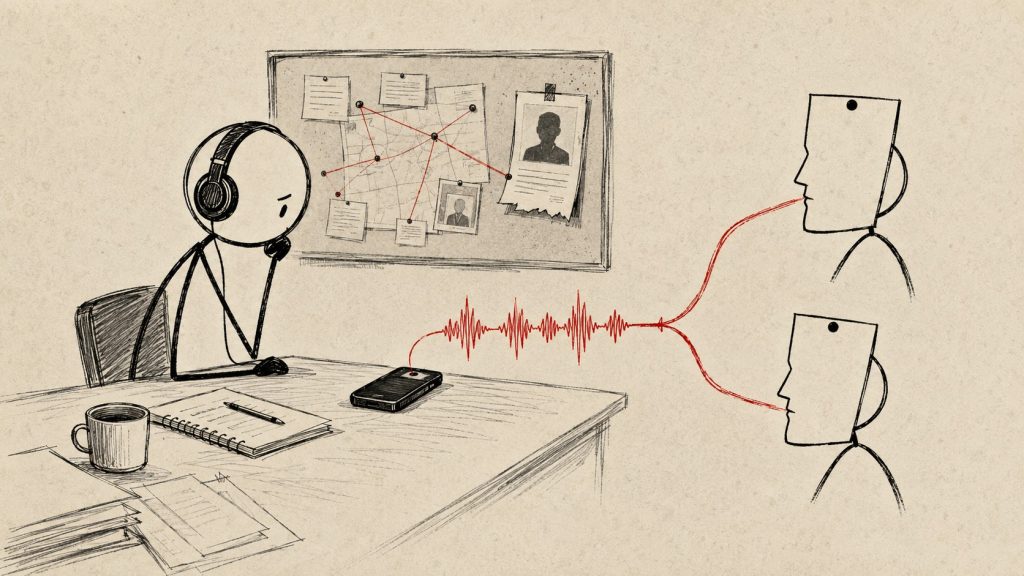
The man who was supposed to be “Benoît” eventually called back. When the PlanHub representative simply asked how installation and payment would work, the caller first asked whether he was an investigator. He then asked about his colour and nationality before declaring in French: “Moi, je ne donne pas de services aux Blancs,” meaning, “I do not provide services to White people.”
He followed with a racist statement about the origin of humanity and quickly ended the conversation.
When the recordings are compared, the match is obvious: the same tone, accent, cadence and intonation. For PlanHub and members of the Reddit community, “Daniel” and “Benoît” are the same caller using two identities. This is not a biometric voice analysis, but the audible similarity is immediate and extremely difficult to dispute.
Beyond the investigation into the Internet offer, the refusal expressed during the call raises a separate issue. Section 12 of Quebec’s Charter of Human Rights and Freedoms prohibits discriminatory refusals involving goods or services ordinarily offered to the public. The province’s human rights commission notes that colour, race and ethnic or national origin are protected grounds.
A Scam Targeting Newcomers
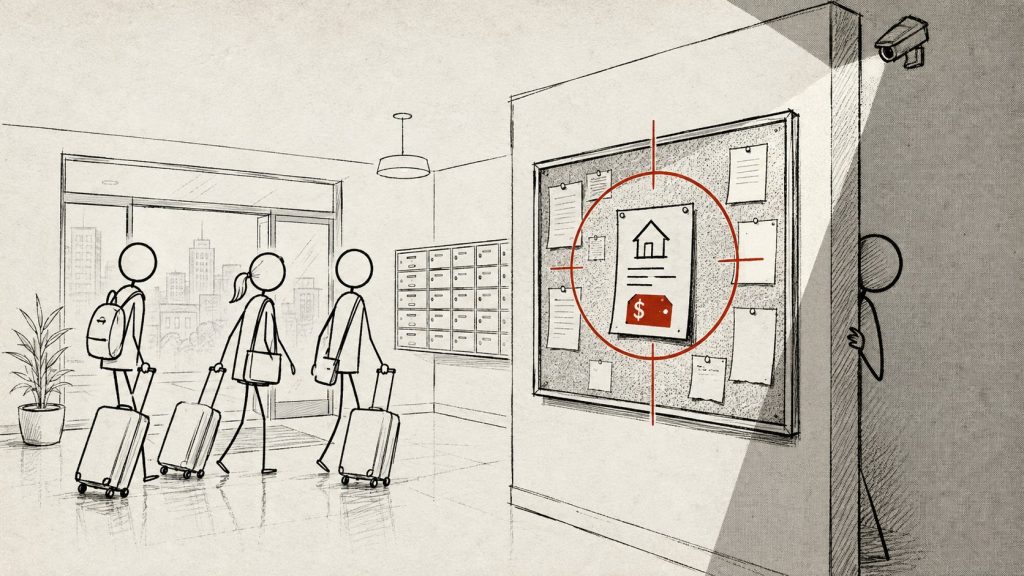
The refusal to serve White people completely changes how this story must be understood. This is no longer simply a confused seller offering a deal that sounds too good to be true. The caller appears to filter potential customers according to their origin or skin colour.
Reddit users have also reported seeing the flyers in buildings and neighbourhoods where many newcomers live, including people from Africa and the Caribbean. The successive Reddit threads about the story generated hundreds of comments. Many participants reached the same conclusion: the offer appears designed to exploit people who may be less familiar with the local market. PlanHub has not independently verified every reported building, but these observations are consistent with the behaviour heard during the third call.
Every sign points to a targeted scam. Someone who recently arrived in Quebec may not know that residential Internet generally costs much more than $20.83 per month, that a provider must issue a written contract or that an 8 Gbps connection cannot credibly be promised at the same vague price as a 50 Mbps service.
This targeting is not based on any lack of intelligence among potential victims. It exploits a normal information gap that exists when someone arrives in a new country: unfamiliarity with local providers, prices, consumer remedies and the documents a legitimate seller must provide. The caller’s identity-based language may be intended to create a false sense of community and trust.
How the Scheme Could Work
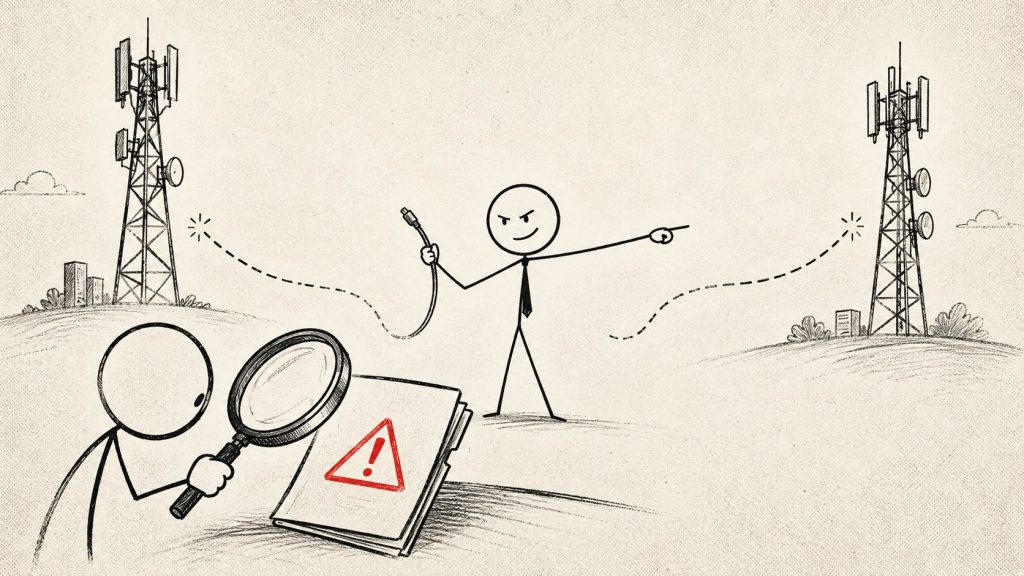
The precise technical method remains unknown. The scheme could involve collecting $250 and temporarily providing a connection obtained through some other means. Another possibility would be opening a legitimate account in the customer’s name, leaving that person responsible for the provider’s later bills. The service could also come from a shared, diverted or unauthorized resold connection.
The absence of a contract, invoice, commercial identity and technical explanation prevents the customer from knowing what is actually being purchased. If an installed connection uses Bell, Videotron or another network without an agreement, it could constitute diverted access or unauthorized resale. Only an inspection of a real installation can confirm that part of the scheme.
What Remains Unknown
The calls document deeply concerning statements, but they do not yet reveal exactly how the service operates. PlanHub has not confirmed:
- the legal identity of the business or the people behind the number;
- a resale agreement with Bell or another provider, while Videotron has told PlanHub that it recognizes no agreement;
- the technology that would be installed in a customer’s home;
- the source of the television service and the 30 promised channels;
- how the service performs after a real installation;
- whether customers have paid $250 and suffered a documented financial loss;
- how customers’ personal information and Internet traffic would be protected.
For PlanHub, the accumulation of facts now supports calling this a targeted scam. What remains to be established is the precise mechanism: how network access is obtained, what is installed in the customer’s home and what happens after each annual payment.
Seven Warning Signs
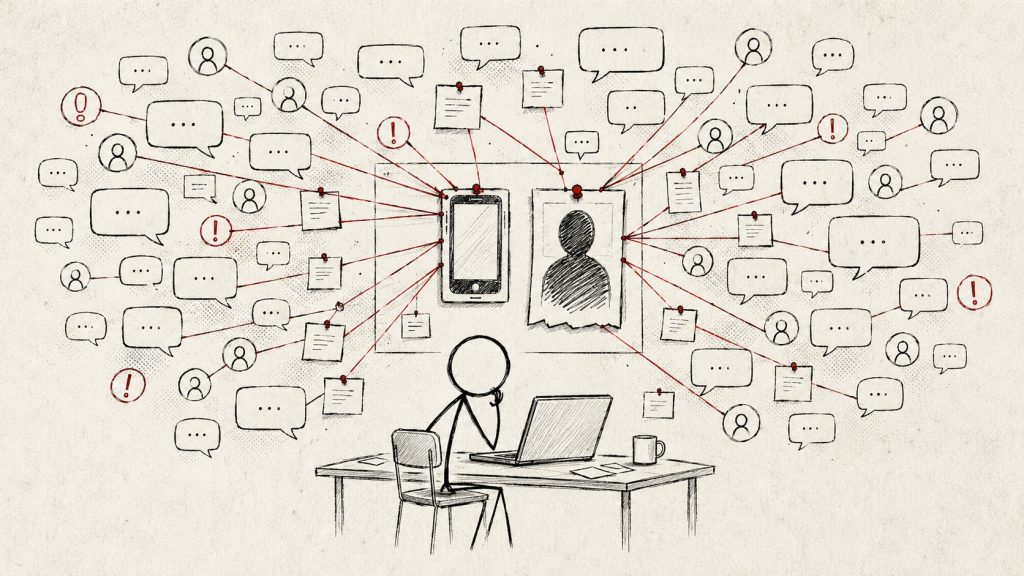
This case combines several warning signs that should lead a consumer to stop the transaction before paying:
- no legal business identity, commercial address or clear online presence on the flyer;
- no guaranteed speed, despite dramatically different speeds being mentioned by phone;
- the same price for every speed, including up to 8 Gbps according to the caller;
- Internet, television, equipment and installation promised for only $250 a year;
- no invoice, contract, customer account or formal follow-up;
- the same man using the names “Daniel” and “Benoît,” then filtering potential customers by skin colour;
- Videotron recognizes no agreement with the person or the offer.
What an Internet Provider Must Normally Give You
Quebec’s Office de la protection du consommateur states that Internet access service contracts must contain specific information. This includes a detailed description of the services, the monthly fee and total cost, the equipment provided, the contract duration and the cancellation terms. For agreements reached online or by phone, the provider must also disclose its name, address, contact information, total price and payment terms.
The CRTC Internet Code also requires large facilities-based providers to present clear contracts and a Critical Information Summary to individual customers.
An invoice, a contract and a verifiable provider identity are not minor formalities. They establish who is responsible for the service and make it possible to seek recourse after an outage, unexpected billing or a failure to honour the agreement.
An offer demanding an annual payment without providing a written contract, a verifiable commercial identity or any document tracing the transaction does not meet these basic consumer protection obligations.
How to Verify an Offer Before Paying
Before sending money or sharing your address, ask for the company’s legal name, address, Quebec enterprise number and a complete contract. Request written confirmation of:
- download and upload speeds;
- the provider that actually operates the network;
- the total price, including taxes and every possible fee;
- ownership of the modem and television receiver;
- the channels included and the legality of the television service;
- installation, trial, cancellation and refund conditions;
- technical support contact information.
If the seller claims to be a partner or reseller of a large company, contact that company directly using the number published on its official website. Do not rely only on contact information supplied by the seller.
Avoid paying cash, cryptocurrency or an individual by electronic transfer until the company’s identity and contract have been verified. Do not allow an unknown person to access a building’s telecommunications panel or install an unidentified router without proof that the person is authorized to do so.
Have You Seen This Flyer in Your Building?
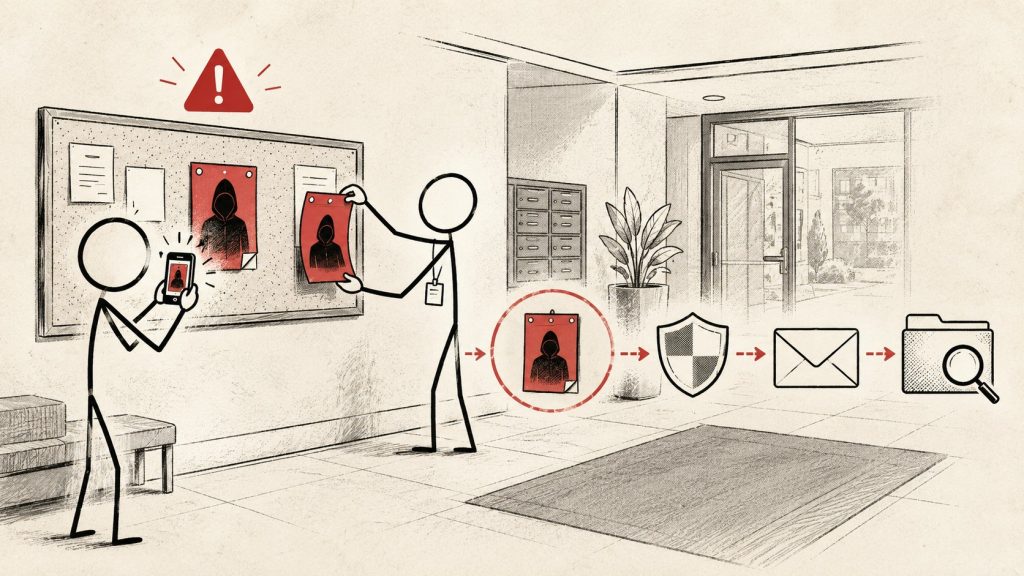
Do not let it circulate without taking action. First, photograph the entire flyer with the number visible, then record the address, floor and date. Send the information to the building owner or manager and, when appropriate, to Videotron, Bell or local police.
If you are authorized to manage notices in the building, remove the flyer so that another person does not share personal information or hand over $250. If you are not authorized, ask the owner or manager to remove it. Keeping a photograph before removal preserves potentially useful evidence for investigations and reports.
Have You Already Paid?
Keep the flyer, messages, phone number, payment record and any information about the appointment or installation. Contact the financial institution that processed the payment as quickly as possible.
A victim or witness can report fraud or an attempted fraud to the Canadian Anti-Fraud Centre. In cases involving a financial loss, the Centre also recommends contacting local police. For a problem involving a consumer contract in Quebec, the Office de la protection du consommateur can provide guidance. If the dispute involves an identifiable telecommunications provider and remains unresolved after contacting it directly, a complaint can also be submitted free of charge to the Commission for Complaints for Telecom-television Services.
Not a Promotion: A Scam That Should Be Reported
Legitimate Internet promotions exist, including offers from small providers and independent resellers. This flyer is not one of them. The seller cannot clearly explain the technology, provides no invoice, promises every speed at the same price, invokes Bell and Videotron without a recognized agreement and changes identity when a potential customer becomes too curious.
The refusal to serve White people appears less like a commercial policy than a method of selecting targets. The offer seems designed to approach people who know less about the local market and may trust a seller presenting himself as a member of their community. Hundreds of comments across the Reddit follow-ups reached the same conclusion.
The exact source of the connection still needs to be established. If the installation uses access to Bell, Videotron or another network without authorization, it could involve diverted access or an illegal resale of service. That hypothesis must still be confirmed through a real installation, but it does not change the conclusion for consumers: do not pay, do not provide your address and report the flyer.
Before responding to a flyer or an unknown seller, you can compare the Internet plans available at your address through PlanHub. Prices, speeds and providers are shown side by side, helping consumers identify legitimate savings without giving up essential protections.
The investigation is continuing. Anyone who has had this service installed or paid the $250 can contact our team and provide, when possible, proof of payment, a contract, an invoice or a photograph of the equipment. Personal information may be redacted.
Sources
- Initial post removed by Reddit’s filters
- PlanHub’s first call
- Second call and the appearance of “Benoît”
- Third call and investigation recap
- Office de la protection du consommateur: Contents of an Internet Service Contract
- CRTC: The Internet Code
- Canadian Anti-Fraud Centre: Report Fraud
- Quebec Human Rights Commission: Discrimination
- CCTS: Submit a Complaint